A rabbit’s digestive system is delicate and unique.
Unlike other pets, their health depends almost entirely on a high-fiber diet.
In 2026, pet parents are moving away from generic store-bought mixes towards organic, high-quality forage.
If you want your bunny to live a long, vet-visit-free life, getting their food right is the first step.
1. 1st Cutting vs. 2nd Cutting Timothy Hay
Not all hay is created equal. Understanding the difference is key to your rabbit’s dental health.
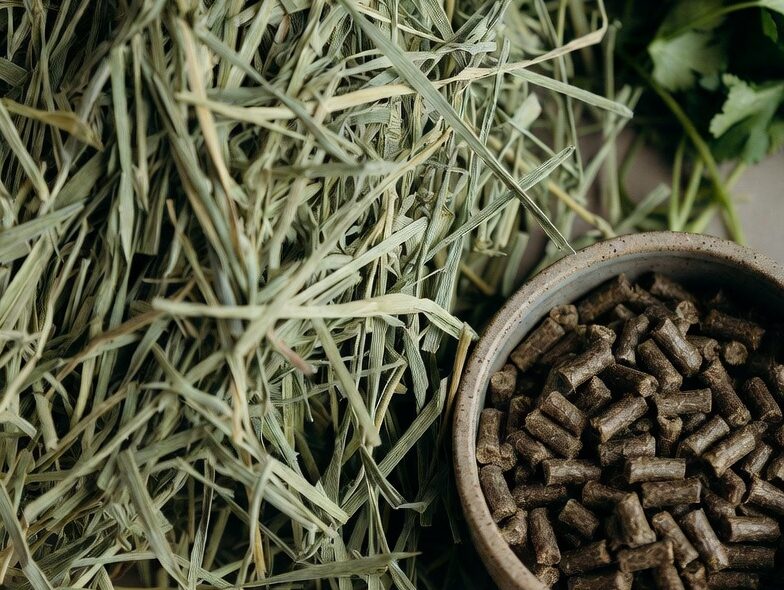
- 2nd Cutting (The Standard): This is the most popular choice. It’s leafy, green, and has a flexible stem, making it perfect for daily eating.
- 1st Cutting (High Fiber): If your rabbit needs to lose weight or has dental issues, 1st cutting is tougher and higher in fiber.
- Where to Buy: Brands like Small Pet Select or Oxbow offer fresh, farm-picked hay that is much better than dusty store bags.
2. Premium High-Fiber Pellets
Pellets should only be a small supplement to hay (about 1/4 cup daily).
- Look for “Timothy-Based”: Avoid pellets that contain colorful seeds, nuts, or corn—these are “junk food” for rabbits.
- Our Pick: Oxbow Essentials Adult Rabbit Food is the top-recommended choice by vets worldwide for its consistent nutritional balance.
3. Safe and Healthy Treats
Who doesn’t love to spoil their bunny? But remember, sugar is the enemy.
- Freeze-Dried Fruits: A small piece of freeze-dried strawberry or apple makes a great training reward.
- Forage Mixes: Instead of sugary drops, try a dried flower and herb mix (rose petals, calendula, and dandelion). It’s natural and stimulates their foraging instincts.