
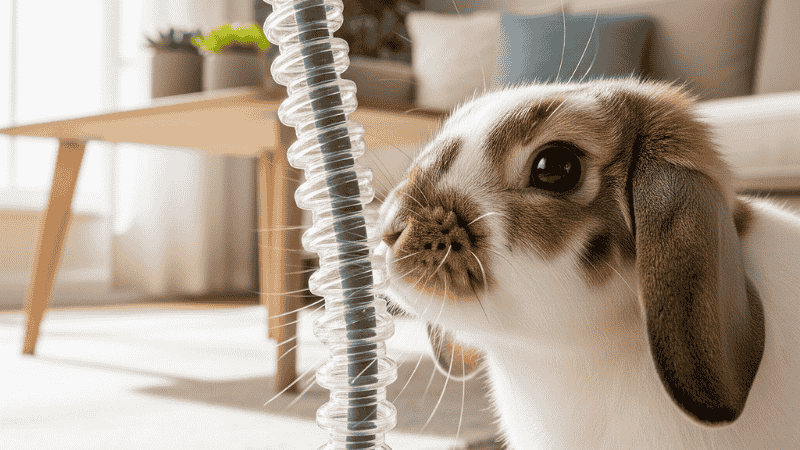
Rabbits are natural explorers, and letting them roam freely outside their hutch is great for their mental and physical health.
However, a typical human home is full of “chewable” dangers—from expensive power cords to wooden baseboards.
If you want to enjoy a stress-free life with a free-roam bunny in 2026, bunny-proofing is a must. Here is your step-by-step guide to making your home a safe playground.
1. Protect Your Electrical Cords
To a rabbit, a thin wire looks exactly like a tasty root or a stray branch. Chewing through a live wire can cause fatal electric shocks or start a fire.
- Plastic Cord Protectors: Invest in heavy-duty spiral cable wrap or hard plastic cord covers. These make wires too thick and tough for a bunny to bite through.
- Hide the Wires: Use furniture to block access to wall outlets or lift cords off the floor using adhesive clips.
2. Guard Your Baseboards and Corners
Wooden baseboards are a favorite target for rabbits looking to wear down their teeth.
- Furniture Guards: Clear plastic corner guards can be attached to the edges of your favorite cabinets or walls.
- Redirect the Chewing: The best way to stop them from chewing your house is to give them something better to chew. Always have plenty of apple wood sticks or seagrass mats available.
3. Use Pet Gates for “No-Go” Zones
Some rooms (like the kitchen or a room with lots of computer gear) are just too hard to bunny-proof completely.
- Pressure-Mounted Gates: A sturdy metal pet gate is the perfect way to keep your bunny in a safe area while still letting them see what’s going on in the rest of the house. Look for gates with narrow bars so they can’t squeeze through.
4. Watch Out for Houseplants
Many common indoor plants are toxic to rabbits if ingested.
- Safe vs. Toxic: Plants like lilies, aloe vera, and ivy should be kept high up on shelves where your bunny can’t reach them.
- Safe Alternatives: If you want greenery at their level, grow some organic wheatgrass or herbs in a heavy ceramic pot that they can safely nibble on.
5. Flooring and Rugs
Slippery floors (like hardwood or tile) can be hard on a rabbit’s joints and lead to “sore hocks.”
- Low-Pile Rugs: Place area rugs or foam play mats in their favorite running spots. This gives them the traction they need to “binky” (jump for joy) safely.
- Avoid Looped Carpets: Rabbits can get their nails caught in looped or “berber” style carpets, which can cause injury.